The Great AI Divide: Geopolitical Fissures Reshape Global Tech Trade
Washington, Brussels, and Beijing intensify the AI export-control war, redrawing trade lanes. Explore the geopolitical fissures shaping global tech and its impl
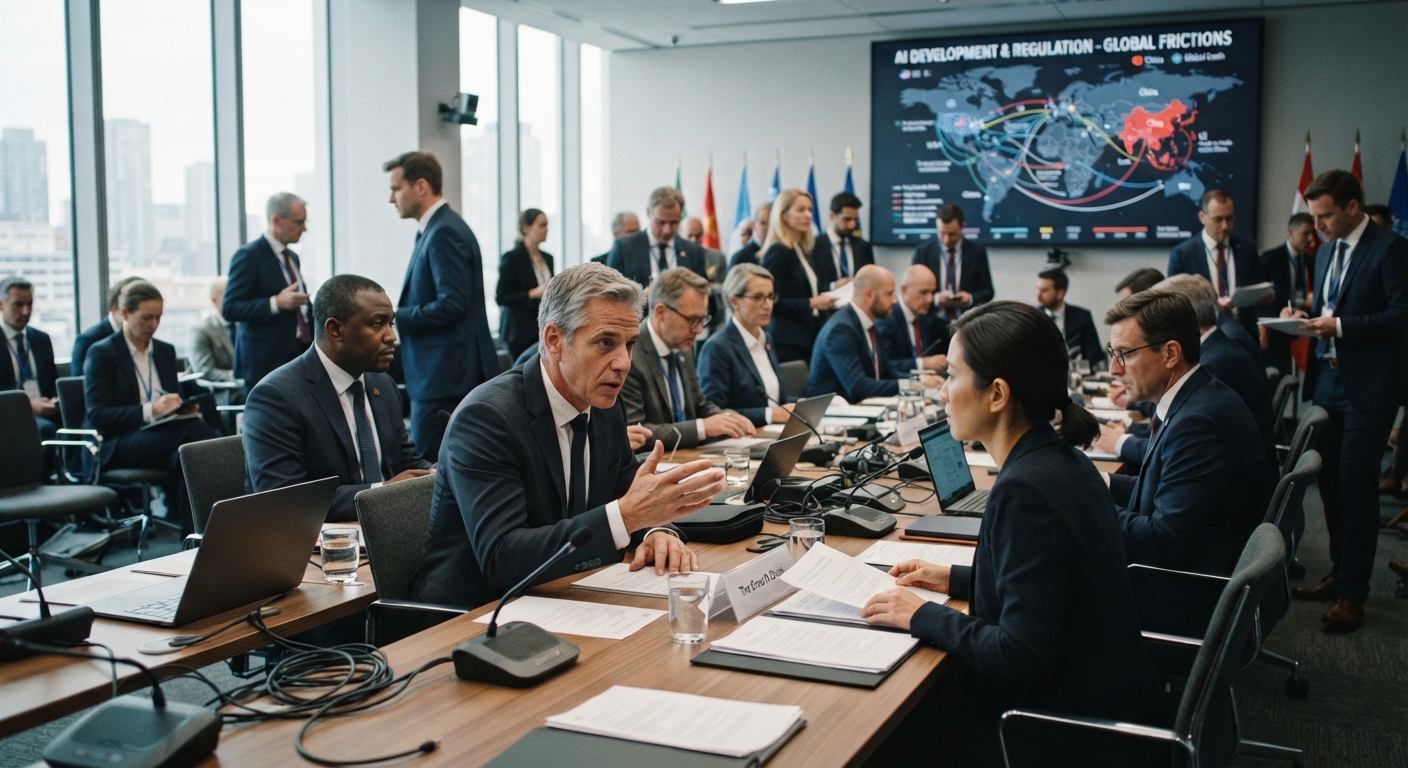
The open global marketplace for artificial intelligence, once a beacon of seamless innovation, is rapidly fracturing. Major powers – Washington, Brussels, and Beijing – are increasingly weaponizing trade policies and export controls, fundamentally redrawing the digital trade map and erecting what some are calling a "Silicon Curtain." This isn't just about chips; it's a strategic maneuver to control the very sinews of future economic and military power.
Washington's Digital Containment Strategy
The Biden administration has doubled down on an aggressive export control regime, particularly targeting advanced semiconductors, AI development software, and manufacturing equipment critical for China's indigenous AI ambitions. The rationale is clear: deny adversaries access to foundational technologies while bolstering domestic capabilities and those of trusted allies. This strategy extends beyond hardware, increasingly scrutinizing data flows, research collaborations, and even the talent pool, aiming to create a secure technological perimeter around the West. The goal is to constrain Beijing's military modernization and economic competitiveness, ensuring U.S. technological supremacy for decades to come.
Beijing's Strategic Resilience Push
China's response has been multifaceted, prioritizing "strategic resilience" and an accelerated drive for self-sufficiency in critical AI sectors. Beijing views these controls as an existential threat, fueling massive state-backed investments in domestic chip manufacturing, AI research, and talent cultivation. While still reliant on some foreign components, China is also exploring counter-measures, including potential export restrictions on critical raw materials essential for global tech supply chains, and leveraging its Belt and Road Initiative to promote alternative technology standards and digital infrastructure with partner nations, further fragmenting the global tech landscape.
Europe's Balancing Act
Caught between two technological titans, the European Union is navigating a complex path. While largely aligned with U.S. concerns regarding national security and human rights in AI, Brussels is also wary of the economic costs of complete decoupling. The EU’s recently enacted AI Act positions it as a global regulatory standard-setter, aiming to shape the ethical and governance aspects of AI. However, its industrial policy remains a delicate balancing act – seeking "strategic autonomy" in critical tech without alienating key trading partners. The EU's challenge is to leverage its regulatory power to influence global norms while ensuring its industries retain access to cutting-edge technologies and markets.
The Local Angle
For policy wonks, investors, and executives, understanding this intensifying AI export-control war is paramount. Policy wonks must analyze these trade lanes as the new frontline of geopolitical competition, shaping future international relations and security doctrines. Investors face heightened risks from supply chain disruptions, market access restrictions, and the potential for stranded assets in regions targeted by controls; conversely, opportunities arise in domestic resilience initiatives and alternative tech ecosystems. Executives must overhaul supply chain strategies, diversify R&D investments, and navigate an increasingly complex compliance landscape. The era of open global tech is over; strategic foresight in this fragmented world is now a non-negotiable for competitive advantage.
Source: Global Policy